Patch Management
Unpatched software is one of the most common entry points for cyberattacks. At Nivando, we handle the entire patch management process for your IT environment, keeping all systems up to date, secure and compliant without disrupting your daily operations.
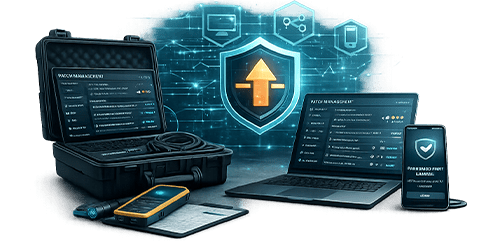
What is Patch Management?
Every piece of software in your IT environment, from operating systems and business applications to network devices and security tools, regularly receives updates from its vendor. These updates, known as patches, fix security vulnerabilities, correct bugs and improve performance. Without a structured process to apply them consistently and on time, your systems remain exposed to risks that are well known to attackers and actively exploited.
For many businesses, patch management is handled reactively or not at all. Updates are applied when someone remembers, critical patches are delayed because nobody wants to risk disrupting operations and systems fall further and further behind. This creates a growing attack surface that puts your data, your systems and your business at risk.
At Nivando, we handle patch management as a structured, automated process. We monitor all systems for available updates, test patches before deployment, schedule rollouts during low-impact windows and verify that every patch has been successfully applied. Every action is documented so you always have a complete audit trail of your patch status.
How Your Patch Management Works
We begin by conducting a full inventory of all software and systems in your environment, establishing a clear baseline of what needs to be patched and how critical each update is. Patches are categorized by severity, with critical security updates prioritized and scheduled for immediate deployment while routine updates follow a regular maintenance cycle.
Before any patch is deployed to your production environment, it is tested in a controlled setting to ensure compatibility and stability. This prevents the common problem of patches breaking existing functionality or causing system conflicts. Once tested and approved, patches are deployed automatically during scheduled maintenance windows that minimize disruption to your daily operations.
After every patch deployment, we verify that all updates have been successfully applied and that no issues have been introduced. Failed patches are flagged immediately and investigated. A complete audit log of all patch activities is maintained at all times, giving you full visibility into your patch compliance status and supporting any regulatory or security audits your business may face.
Why It Matters
Frequently Asked Questions
Everything you need to know about our patch management service.
1. What systems and software does your patch management cover?
We cover all systems and software in your IT environment including Windows and Linux operating systems, third-party applications, network devices, security tools and cloud platforms. Every system that receives vendor updates is included in our patch management process.
2. How do you avoid patches breaking existing systems?
Every patch is tested in a controlled environment before being deployed to your production systems. We verify compatibility and stability before rollout and monitor systems closely after deployment to catch any issues immediately.
3. When are patches deployed?
Patches are deployed during scheduled maintenance windows that are agreed with you in advance. Critical security patches are prioritized and deployed as quickly as possible while routine updates follow a regular cycle that minimizes disruption to your operations.
4. How do you handle failed patches?
Failed patches are flagged immediately and investigated by a certified engineer. We identify the cause, resolve any compatibility issues and redeploy the patch as soon as it is safe to do so. You are notified of any patch failures and the steps being taken to resolve them.
5. Can you provide patch compliance reports for audits?
Yes. We maintain a complete audit log of all patch activities including what was patched, when it was applied, whether it was successful and which systems remain outstanding. This documentation is available on request and supports compliance with GDPR, ISO 27001 and other regulatory requirements.
Ready to Close Your Security Gaps for Good?
No sales pitch. No commitment. Just a straightforward conversation about how we can keep your systems secure and compliant.