
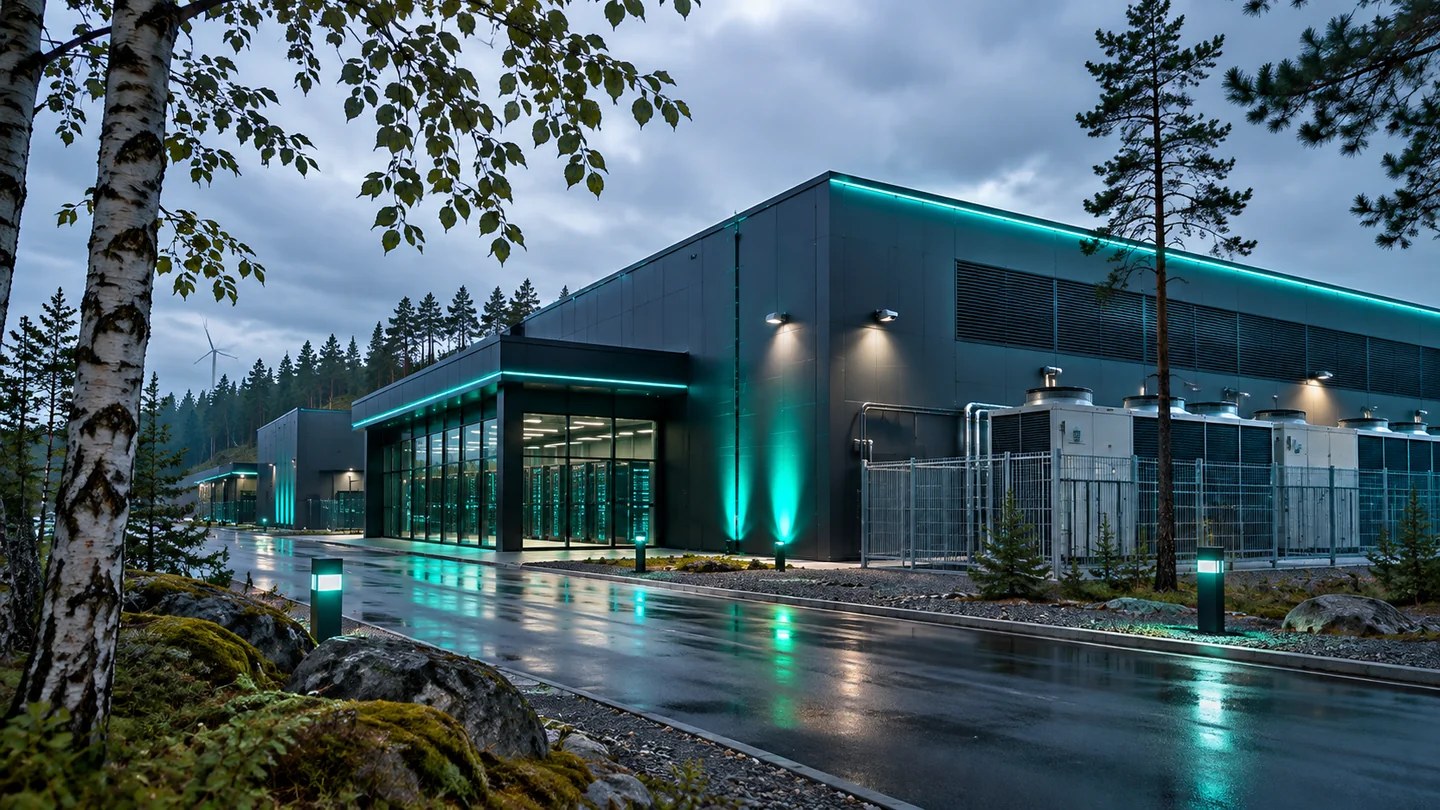
Five partners plan a cross-border data centre network
On 16 November 2026, Nokia, Nscale, Telia, Skeleton and Verda announced the formation of AI Gigafactory Northern. The consortium proposes a federated architecture connecting multiple data centre sites across the Nordic and Baltic region. Planned locations include Oulu, the Tallinn area and Valmiera, as well as a Swedish site yet to be determined.
The partners intend to bid for a European High-Performance Computing Joint Undertaking (EuroHPC JU) tender. The initiative combines computing capacity, cloud services, high-capacity networks and low-carbon energy. At the time of the announcement, this was a proposed initiative, not an awarded tender or operational production capacity.
Distributed infrastructure goes beyond geographical redundancy
Multiple sites can reduce dependence on individual regions and power connections. The benefits depend on an architecture that considers data flows, network latency, capacity planning and failure scenarios together. Bandwidth and synchronisation are particularly important constraints for distributed AI training.
For enterprises procuring cloud and AI services, Nivando recommends reviewing actual data locations, administrative access, subcontractors and contractual exit options. A European site address alone demonstrates neither technical independence nor compliance with every regulatory requirement.
Base cloud decisions on measurable operational requirements
When selecting a platform, enterprises should distinguish different workload profiles. Interactive AI applications require low response times, while large training or batch jobs may have different capacity and location requirements. A transparent cost model accounts for compute time, storage, data transfer and operational effort.
Nivando Grid recommends documenting availability, recovery and data portability requirements before choosing a provider. Regular recovery tests and verifiable service levels help ensure distributed infrastructure genuinely contributes to resilience and long-term operational flexibility.
Sources
Related IT services